PM Surya Ghar Yojana: Complete Guide
PM Surya Ghar Yojana gives up to ₹78,000 subsidy on rooftop solar. See eligibility, documents, loan options and the exact steps to apply in 2026.
SSolar News World Editorial Team · 11 min read
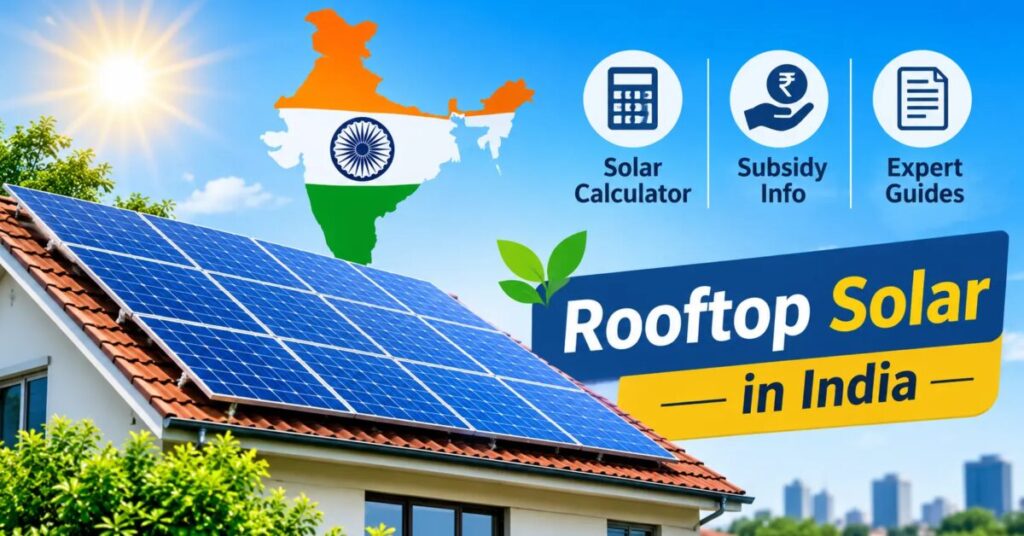
The PM Surya Ghar Yojana is the central government’s rooftop solar scheme for homes. It pays a subsidy of up to ₹78,000 on a residential system and backs it with low-interest bank loans.
The aim is solar on one crore roofs by March 2027. In plain terms, the government pays part of your solar bill so that your electricity bill drops.
This guide explains what the scheme gives you, who can join, what it costs after subsidy and how the process runs from registration to the money reaching your account. It also covers the mistakes that delay or cancel subsidies, because those are the questions people ask most.
Quick answer: PM Surya Ghar Muft Bijli Yojana pays ₹30,000 per kW for the first 2 kW and ₹18,000 for the third kW, capped at ₹78,000. You apply on the national portal, pick a registered vendor, get the system installed and inspected, and the subsidy lands in your bank account after commissioning.
Key takeaways
- The central subsidy is ₹30,000 for 1 kW, ₹60,000 for 2 kW and ₹78,000 for 3 kW or more. Nothing is paid beyond 3 kW.
- Special-category states and Union Territories get slightly higher rates, ₹33,000 and ₹19,800 per kW.
- You must use a vendor registered with your electricity distribution company (DISCOM) and apply through the national portal.
- Collateral-free bank loans are available for the part you pay yourself.
- Some states, such as Uttar Pradesh, add their own subsidy on top of the central amount.
- Use the solar calculator first, so you size the system before talking to any vendor.
What is the PM Surya Ghar Yojana?
The scheme is formally called PM Surya Ghar: Muft Bijli Yojana. The Union Cabinet approved it on 29 February 2024 with an outlay of ₹75,021 crore, and it runs until the end of FY 2026-27. Its target is rooftop solar on one crore households.
Households that install solar can use up to 300 units of free electricity a month, depending on the system size and sunshine. Any extra power goes to the grid through a net meter, and the DISCOM credits it against your bill. We explain that process in our solar systems and net metering guides.
Progress has been uneven but real. Press reports quoting the ministry put beneficiary households above 40 lakh by mid-2026, and the ministry’s secretary has said the final count may land between 85 and 90 lakh households by March 2027. That is short of the one crore target. However, it still makes this the largest household solar programme in the world.
How much subsidy do you get?
The subsidy depends only on the capacity you install, up to 3 kW. A bigger system costs you more but does not earn a bigger subsidy.
| System size | Central subsidy (general states) | Special-category states |
|---|---|---|
| 1 kW | ₹30,000 | ₹33,000 |
| 2 kW | ₹60,000 | ₹66,000 |
| 3 kW or more | ₹78,000 | ₹85,800 |
Because the cap sits at 3 kW, the subsidy covers a smaller share of the bill as systems get bigger. For a 3 kW system quoted at ₹1.8 lakh, the subsidy covers about 43 percent. For a 5 kW system quoted at ₹3.3 lakh, the same ₹78,000 covers under a quarter.
What a 3 kW system costs after subsidy
Prices vary by city, brand and roof type. Still, a typical quote for a 3 kW on-grid system sits between ₹1.8 lakh and ₹2.4 lakh in 2026. The table shows what you pay once the central subsidy arrives.
| Item | Amount |
|---|---|
| Typical 3 kW on-grid quote | ₹1,80,000 – ₹2,40,000 |
| Central subsidy | ₹78,000 |
| Net cost to you | ₹1,02,000 – ₹1,62,000 |
| Extra state subsidy (UP, for example) | up to ₹30,000 |
You pay the full amount to the vendor first. The subsidy comes back to you later, so plan your cash flow around that gap or use the loan route described below.
Who is eligible?
The rules are short. If you meet all of them, you can apply.
- You are an Indian citizen and an owner of the house.
- Your roof is suitable, meaning it is shadow-free and strong enough for panels.
- You have a valid residential electricity connection.
- You have not taken another solar subsidy for the same connection.
There is no income limit. Each electricity consumer number gets one subsidy, so a joint family on one connection counts as one household.
Tenants face a practical problem. The application needs proof of ownership or the owner’s consent, so a tenant should ask the landlord to apply or to sign a no-objection letter. Residents of flats can use the group housing route, which pays ₹18,000 per kW for common facilities such as lifts, lighting and EV charging, up to 500 kW in total.
How big a system do you need?
Size the system to your bill, not to the subsidy. A rough rule from field experience is that each kW produces about 120 units a month, which is around four units a day. Roof space follows the rule of thumb of about 10 square metres of shade-free area per kW.
| Monthly use (units) | Suggested size | Roof area needed | Central subsidy |
|---|---|---|---|
| 100 – 150 | 1 kW | About 10 m² | ₹30,000 |
| 200 – 250 | 2 kW | About 20 m² | ₹60,000 |
| 300 – 400 | 3 kW | About 30 m² | ₹78,000 |
| 450 – 600 | 4 – 5 kW | 40 – 50 m² | ₹78,000 |
If your usage is seasonal, size for the yearly average rather than the summer peak. Net metering lets summer surplus offset winter use, so a slightly smaller plant is often the smarter buy. The rooftop solar calculator shows how many panels your roof can actually hold, and the smaller of the roof limit and the bill limit sets your size.
What the timeline looks like
Most applicants want to know how long the whole thing takes. The honest answer is that the paperwork takes longer than the installation.
| Stage | Typical time |
|---|---|
| Registration and application | 1 – 2 days |
| DISCOM feasibility approval | A few days to two weeks |
| Installation of a home system | 1 – 3 days |
| Net meter installation and inspection | 1 – 3 weeks |
| Subsidy credit after commissioning | About 30 days |
These figures are typical, not guaranteed. A slow DISCOM office or a missing document can stretch any stage, so follow up on the portal every few days.
How the scheme compares with PM-KUSUM
People often confuse the two programmes. PM Surya Ghar is for urban and rural homes that want rooftop solar. PM-KUSUM is aimed at farmers, covering solar pumps and small plants on farmland. A home needs the first, and a farm irrigation pump needs the second. We cover the farm scheme separately under solar subsidy.
Documents you need
Keep these ready before you open the portal. Missing papers are the most common reason for delays.
- Aadhaar card of the applicant and a mobile number linked to it.
- A recent electricity bill showing your consumer number and DISCOM name.
- Proof of roof ownership, such as a property tax receipt or sale deed.
- Bank account details with a cancelled cheque, for the subsidy transfer.
- A passport-size photograph.
How to apply for the PM Surya Ghar Yojana
A detailed portal walk-through will follow in our solar subsidy guides. The short version has six steps.
- Register. Open the national portal, choose your state and DISCOM, and enter your consumer number, mobile and email.
- Apply. Log in and submit the rooftop solar application. The DISCOM checks feasibility.
- Pick a vendor. After approval, choose a vendor registered with your DISCOM and agree on the system size and price.
- Install. The vendor installs the panels, inverter and net meter connection.
- Inspect. You submit the installation details, and the DISCOM inspects the plant and commissions it.
- Receive the subsidy. You upload your bank details, and the central subsidy follows in your account, normally within about a month of commissioning.
Never pay a vendor who promises to “get the subsidy approved” before the portal shows your application. The subsidy follows the process, not the vendor.
Loans under the scheme
You do not need to pay the whole amount from savings. Public sector banks offer collateral-free loans for rooftop solar under the scheme.
| Loan feature | Detail |
|---|---|
| Loan up to ₹2 lakh | Collateral-free, concessional rate around 6 to 7 percent |
| Loan above ₹2 lakh, up to ₹6 lakh | Priced close to the bank’s home loan rate |
| Tenor | Up to 10 years |
| Processing fee | Nil at several banks |
At about 7 percent, a ₹2 lakh loan over ten years comes to an EMI near ₹2,320. A 3 kW system in a city with average tariffs can save more than that each month, so the system can pay its own loan. Rates change often, so confirm the figure with the bank and the national portal before you commit.
State subsidies on top of the central subsidy
The central amount is the same everywhere, but a few states add their own. Uttar Pradesh gives ₹15,000 per kW up to ₹30,000 on top, which takes a 3 kW system to ₹1,08,000 in total support. Our solar subsidy section covers that stack by state, and Delhi follows a similar pattern. Always check your state energy agency, because top-ups change with budgets.
Common mistakes that cost people their subsidy
These are the errors we see most often.
- Buying first, registering later. Install only after the DISCOM approves your application.
- Using an unregistered vendor. The portal rejects subsidy claims routed through vendors outside your DISCOM’s list.
- Wrong equipment. The scheme needs domestic-content solar modules, so a cheaper imported panel can void the claim.
- Oversizing for the subsidy. Bigger than 3 kW raises your cost without raising the subsidy. Size to your bill instead.
- Ignoring shade. A tree or water tank shadow at noon cuts output more than most buyers expect.
Is it worth it?
For most homes, yes. A 3 kW system produces roughly 12 units a day on average. At ₹7 per unit, that is about ₹2,500 of electricity a month. After a ₹1 lakh net cost, the payback period lands near three to four years, and panels typically keep producing for 25 years.
Worth it is not automatic, though. Households that use fewer than 100 units a month may see slower returns. Homes with a shaded roof or a tenant living in a rented house should think twice. Run your own numbers with the 3 kW solar system calculator before you decide.
Frequently asked questions
Is the PM Surya Ghar Yojana really free?
No. The scheme is a subsidy, not a free gift. You pay the vendor first, and the government refunds ₹30,000 to ₹78,000 to your bank account after the system is commissioned. What you get free is the electricity itself, up to 300 units a month, once the panels run.
What is the last date to apply?
The scheme is sanctioned until the end of FY 2026-27, which is 31 March 2027. The portal keeps registering applicants until funds or the target run out, so apply early rather than near the deadline.
Can I get the subsidy if I live in a rented house?
You need ownership proof or the owner’s written consent. If the landlord agrees, the application can go through in the owner’s name, since the subsidy attaches to the connection and the house.
Can I install more than 3 kW?
Yes, but the central subsidy stops at 3 kW. Residential connections up to 10 kW sanctioned load are eligible, so a 5 kW system is allowed. You simply receive the same ₹78,000.
Do I pay the vendor the full amount?
Usually yes, and the subsidy arrives later. Some banks release loans in stages, which reduces the upfront payment. Never pay a vendor the full amount before installation and inspection are complete.
How long does the subsidy take to arrive?
The central subsidy normally arrives within about 30 days of commissioning, after the DISCOM confirms the plant. State top-ups can take longer because a second agency processes them.
Does the scheme cover off-grid or hybrid systems?
The subsidy is for grid-connected systems with a net meter. Off-grid and battery-backed hybrid systems do not qualify, so factor in the extra cost if you want backup power.
Which website do I use to apply?
Use only the official national portal, pmsuryaghar.gov.in. Our site is an independent information guide and does not accept applications or payments.
What to do next with the PM Surya Ghar Yojana
Start with your electricity bill. Find your average monthly units, then use the solar calculator to size the system and see the subsidy. After that, register on the national portal and ask two or three registered vendors for written quotes.
If you plan to compare costs, read our solar panel price guide, the solar inverter buying guide and the explainer on the on-grid solar system that the scheme subsidises. For more on subsidies, see the full solar subsidy section, or return to the Solar News World homepage for every guide and calculator.
*Solar News World is an independent information site. It is not a government website and is not affiliated with MNRE or the PM Surya Ghar portal. Check subsidy rules on the official portal before you buy.*