Solar Panel Subsidy: Complete Guide
Solar panel subsidy in India explained: how much you get per kW, who qualifies, how the payout works, state top-ups and the mistakes that cancel claims.
SSolar News World Editorial Team · 9 min read
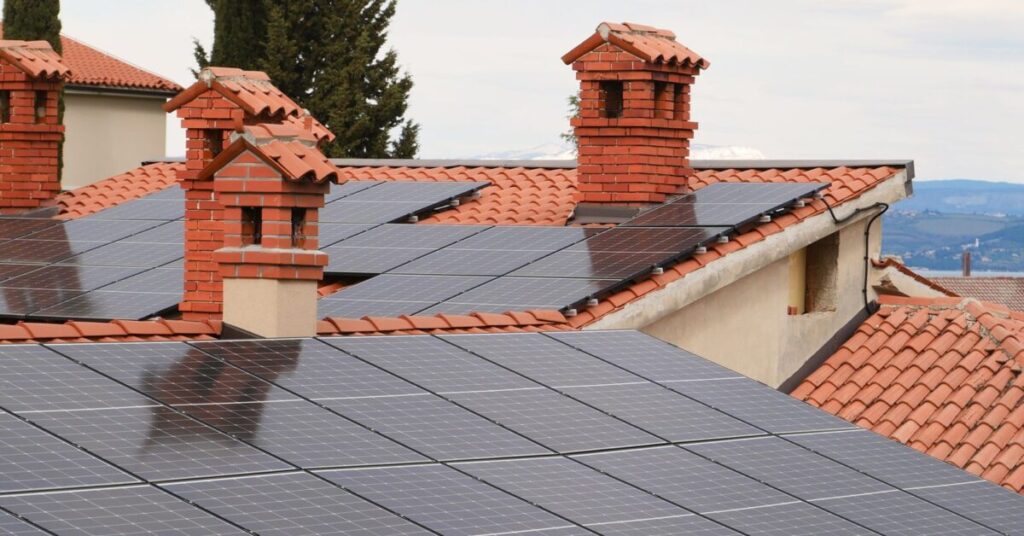
A solar panel subsidy is a part-refund of what you spend on a rooftop system. In India, the main one comes from the central government under the PM Surya Ghar scheme and pays up to ₹78,000 per home. A few states add their own amount on top.
Most people searching for this want three answers. How much will I actually get, when does it arrive, and what could stop it? This guide answers each one with numbers. It is also blunt about the cases where the subsidy does not apply.
Quick answer: The central solar panel subsidy is ₹30,000 per kW for the first 2 kW and ₹18,000 for the third kW, capped at ₹78,000. It is paid to your bank account after your grid-connected system is installed, inspected and commissioned by the electricity distribution company.
Key takeaways
- The central subsidy is ₹30,000, ₹60,000 and ₹78,000 for 1, 2 and 3 kW or more.
- It is a refund, so you pay the vendor in full first.
- Only grid-connected systems from registered vendors qualify.
- Uttar Pradesh and Delhi add up to ₹30,000 for eligible homes. Other states vary, so check yours.
- The subsidy stops at 3 kW, which makes a 3 kW plant the best-value size for most homes.
- You can estimate your own refund with the solar calculator.
How much solar panel subsidy will you get?
The rule has two layers. First, each of the first two kW earns ₹30,000. Then the third kW earns ₹18,000. After that, nothing more is paid.
| Capacity installed | Central subsidy | Share of a typical cost |
|---|---|---|
| 1 kW | ₹30,000 | About 45 percent |
| 2 kW | ₹60,000 | About 48 percent |
| 3 kW | ₹78,000 | About 38 percent |
| 5 kW | ₹78,000 | About 24 percent |
| 10 kW | ₹78,000 | About 12 percent |
The percentage column is the part many guides skip. It shows that the subsidy helps small systems most. A household that needs 4 kW can still go ahead, but the extra kilowatt comes at full price. So it is often wiser to install 3 kW now and add capacity later, once the first plant has proved itself.
Special-category states and Union Territories, mainly in the hills and the North-East, get higher rates of ₹33,000 and ₹19,800 per kW, which makes the cap ₹85,800.
Central and state subsidy together
However, only some states add a top-up. Uttar Pradesh gives ₹15,000 per kW up to ₹30,000 through its energy agency, and Delhi also advertises up to ₹30,000 per home, though its per-kW rules differ. In both, a 3 kW system can earn ₹1,08,000 in total support. The table shows the Uttar Pradesh pattern.
| System | Central | UP state top-up | Total |
|---|---|---|---|
| 1 kW | ₹30,000 | ₹15,000 | ₹45,000 |
| 2 kW | ₹60,000 | ₹30,000 | ₹90,000 |
| 3 kW | ₹78,000 | ₹30,000 | ₹1,08,000 |
Because state rules change with budgets, confirm with your state agency before you buy. We track state schemes in the solar subsidy category, and the central rules are covered in our PM Surya Ghar Yojana guide.
Who can claim a solar panel subsidy?
You need to meet every condition below.
- The connection is residential, with a sanctioned load of up to 10 kW.
- You own the house or have the owner’s written consent.
- You install a grid-connected system with a net meter.
- You use a vendor registered with your electricity distribution company.
- The modules meet domestic-content rules.
- You have not taken another solar subsidy on the same connection.
Commercial and industrial users are not eligible under this scheme. Likewise, farmers who want solar pumps need a different programme, which we cover in the subsidy section.
What is not covered
Several things surprise buyers, so read this list twice.
- Batteries. A system with batteries and no grid connection does not qualify.
- Extra capacity. Anything above 3 kW earns no extra subsidy.
- Equipment bought separately. Panels you buy and fit yourself are outside the scheme.
- Work done before approval. Installing first and applying later can disqualify the claim.
How the subsidy is paid
The refund follows a fixed order. If you understand it, you can plan your cash.
| Step | What happens | Who acts |
|---|---|---|
| 1 | You register and apply on the national portal | You |
| 2 | DISCOM approves feasibility | DISCOM |
| 3 | Registered vendor installs the system | Vendor |
| 4 | You upload installation details and apply for the net meter | You or vendor |
| 5 | DISCOM inspects and commissions | DISCOM |
| 6 | You submit bank details and the central subsidy is credited | Government |
The credit normally arrives about 30 days after commissioning. State top-ups come from a second agency, so they can take longer. Therefore, do not count on the refund when you plan the payment schedule with the vendor.
Bridging the gap with a loan
Because the refund comes after you pay, many households borrow the gap. Banks offer collateral-free loans up to ₹2 lakh at concessional rates, and larger loans up to ₹6 lakh at rates close to a home loan. Some banks reduce your EMI once the subsidy is credited. Compare offers and keep an eye on processing fees.
A realistic example
Take a 3 kW on-grid plant quoted at ₹1.9 lakh in a city with no state top-up.
| Item | Amount |
|---|---|
| Vendor quote | ₹1,90,000 |
| Central subsidy | ₹78,000 |
| Net cost | ₹1,12,000 |
| Estimated yearly saving at ₹7 per unit | About ₹30,000 |
| Payback | About 3.7 years |
If you add the ₹30,000 state top-up in UP or Delhi, the net cost falls to ₹82,000. That shortens payback to under three years. Use the solar bill savings calculator to repeat this with your own units.
Flats and housing societies
Apartment owners often assume they are left out, but the scheme has a separate route. Resident welfare associations and group housing societies can claim ₹18,000 per kW for common facilities, such as lifts, lighting, water pumps and EV charging. The limit is 500 kW in total, calculated at 3 kW for each house in the society.
| Route | Who applies | Subsidy |
|---|---|---|
| Individual house | The homeowner | ₹30,000 per kW for the first 2 kW, ₹18,000 for the third |
| Group housing society or RWA | The society | ₹18,000 per kW for common facilities, up to 500 kW |
| Individual flat with its own roof access | The owner, with society consent | Same as an individual house, if the connection and roof qualify |
Societies need a resolution from members and a roof that every owner has agreed to share. So expect meetings before you expect panels.
Myths and facts
| Myth | Fact |
|---|---|
| The subsidy is free money | It is a refund after you pay for the system |
| Bigger systems earn bigger subsidies | The central subsidy stops at 3 kW |
| Any vendor can claim it for you | Only vendors registered with your DISCOM can |
| Applying later is the same as applying first | Installing before approval can cancel the claim |
| The subsidy arrives on installation day | It arrives after inspection and commissioning |
Why claims get rejected
Rejections are usually avoidable, and these are the main causes.
- Unregistered vendor. The portal links the claim to the vendor.
- Ineligible modules. Non-compliant panels fail verification.
- Name mismatch. The Aadhaar name, bank account name and electricity bill name should match.
- Wrong bank details. An inactive or closed account delays the transfer.
- Incomplete commissioning. The DISCOM has not finished the inspection.
- Installation before approval. The application has to come first.
Also keep digital copies of every document. If the DISCOM raises a query, reply on the portal quickly, because queries can pause the clock.
If the subsidy has not arrived
A delay is stressful, but it usually has a cause you can find. Work through these steps in order.
- Check the portal status. It often shows which stage is pending.
- Confirm commissioning. The DISCOM must have issued the commissioning certificate.
- Verify your bank details. A closed account, wrong IFSC code or name mismatch stops the transfer.
- Contact the DISCOM’s solar cell. Quote your application number and ask what is pending.
- Raise a grievance on the portal. Keep screenshots of every reply.
Give it at least 30 days from commissioning before you escalate, because that is the normal window.
Scams to watch for
Subsidy schemes attract fake agents. Ignore anyone who asks for an upfront “registration fee”, offers a guaranteed subsidy for cash or sends you to a lookalike website. The real scheme runs on one official national portal, and registration there is free. Our site, meanwhile, is information only. We do not take applications, money or personal documents.
Is a solar panel subsidy worth chasing?
Yes, for most owners with a stable connection and a usable roof. The refund cuts the payback to around three to four years, and the savings then continue for decades. However, the subsidy is not a reason to buy a system you do not need. If your bill is under ₹800 a month, the payback stretches, so a 1 kW plant may be enough.
Frequently asked questions
How much is the solar panel subsidy in India?
The central subsidy is ₹30,000 per kW for the first 2 kW and ₹18,000 for the third kW, with a cap of ₹78,000. States like Uttar Pradesh and Delhi add up to ₹30,000 more.
Is the solar panel subsidy paid upfront?
No. You pay the vendor the full price and the government credits the subsidy to your bank account after commissioning, usually within about 30 days.
Can I get a subsidy for a 5 kW system?
Yes, you can install 5 kW, but the central subsidy stays at ₹78,000. The remaining capacity is at full cost.
Is there a subsidy for off-grid solar panels?
Not under the central rooftop scheme for homes. The subsidy needs a grid-connected system with a net meter.
Do tenants get a solar panel subsidy?
Only with the owner’s consent or proof of ownership. The subsidy attaches to the connection and the property.
Does the subsidy depend on income?
No. There is no income limit. The scheme is open to residential households with a suitable roof and a valid connection.
Where do I apply?
Apply on the official national portal at pmsuryaghar.gov.in. State agencies may run companion portals for their own top-ups.
Can I claim the subsidy twice for the same house?
No. The scheme gives one subsidy per electricity connection.
Getting your solar panel subsidy right
A solar panel subsidy rewards people who follow the sequence: apply, wait for approval, install through a registered vendor, commission and claim. Skip a step and the refund is at risk. Start by sizing your system with the rooftop solar calculator, then check prices in the solar panel price guide.
For hardware choices, see the on-grid solar system guide and the solar inverter guide. Return to the homepage any time for the full set of tools.
Solar News World is an independent information site. It is not a government website and does not accept subsidy applications. Check current rules on the official portal and with your state agency.